Posted on September 20, 2011

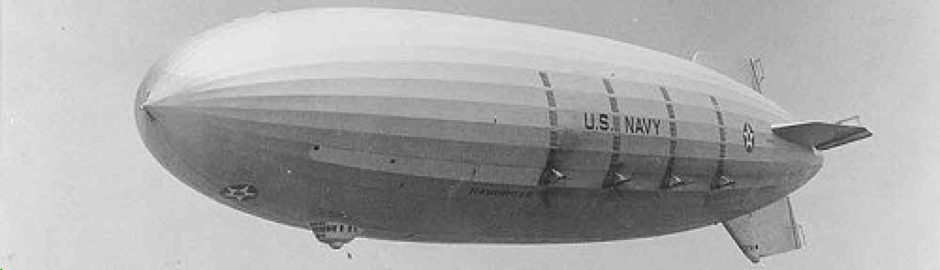
Lt. Elliott McFarlan Moore, USN (ret), my mother’s father, was killed at the age of 31 in a plane crash off Avalon Harbor, Catalina Island, California, on November 2, 1933. Moore died just seven months after his father-in-law, Admiral William Adger Moffett was killed in the crash of the USS Akron. He had a wife and three children at the time of his death.
“Mac” Moore, a retired Naval aviator, was the General Manger of the Wilmington-Catalina Airline, Ltd. (“WCA”), an airline founded in 1931 by William Wrigley, Jr., a close friend of Admiral Moffett.
WCA purchased two amphibious Douglas Dolphin seaplanes in 1931 and ran flights between Wilmington, California (near the Port of Los Angeles) and Hamilton Cove, a cove adjacent to Avalon Harbor, on Catalina Island. Takeoffs and landings of the Douglas Dolphins were made on the water, as can been seen in this video about the Island and the SS Catalina, a steamship owned by Wrigley that also provided transportation between the Island and the mainland.
Wrigley founded WCA to make Catalina Island, which Wrigley owned, more accessible to the mainland. By 1933, Moore had been hired as WCA’s General Manager. He moved his young wife, Janet, and three small children, Janet “Janita” Moffett Moore, William Moffett Moore, and Elliott McFarlan Moore, Jr., to live on Catalina Island.
WCA was the first commercial airline to purchase the Douglas Dolphin, an amphibious flying boat, for commercial use. Douglas initially introduced the Dolphin as a luxury flying yacht called the Sinbad, but the Depression forced a rethinking of that strategy, and the addition of retractable landing gear to the aircraft, to make it amphibious. The Dolphin was the first aircraft produced by Douglas for passenger use, and was the first of a long line of Douglas airliners to achieve success as such.
One of the first Douglas Dolphins was secretly purchased by William Boeing, who later sold it to WCA, which used it for the Los Angeles to Catalina shuttles. Coke Darden of Edmund, SC purchased and restored this plane and flew it for several years. The excellent footage below was taken by Darden on Oct.30, 1998, and gives an intimate view of how the aircraft looked and sounded in operation. Notice that the landing gear was retracted manually, with a hand pump that can be heard early in the video.
Shortly after this video was shot, Darden discovered damage in the plane’s wings. She was never flown again, and is now on display at the Naval Museum in Pensacola, Fl.
Only 58 Dolphins were built. A Douglas Dolphin was purchased by the US Navy as a transport for President Roosevelt, but was never used as such..
Two men died in the crash off Catalina Island on November 2, 1933 — Moore and the copilot George Baker. Walter L. “Si” Seiler, the Chief Pilot of Catalina Airlines, was piloting NC12212 at the time it crashed. He was severely injured.
The mechanic for WCA was Russ Gerow, who described the accident as a mishap that occurred in a test flight intended to simulate flying blind, in an early morning fog. For that purpose, pilot Seiler was attempting to taxi out and take off after placing a hood over his head that prevented him from seeing.
Russ Gerow on the Crash of NC12212
As NC12212’s mechanic during his stay on Catalina, Russ Gerow was intimately familiar with the Douglas Dolphin and its workings. When asked in 1982 about the crash in which two people lost their lives, he said that the crash of NC12212 was practically guaranteed by the Dolphin\’s control-yoke arrangement. The pilot and copilot shared a wheel which swiveled up and over to either seat by means of a latching knuckle joint about halfway up the column.
Someone in management of the airline became interested in the possibility of flying an earlier passenger run through the morning fog to the mainland, instead of waiting for the usual noon burn off. The pilot placed a hood over his head to simulate zero-visibility conditions — in perfectly clear weather.
A test run was made from the turntable that facilitated launching the amphibious Dolphins into the water with Seiler under a hood the whole time. Blindly flying NC12212 by the seat of his pants, the hooded Si found himself in trouble almost immediately. Before the wheel could be unlatched and swung over to the copilot, Baker, NC12212 crashed into the waters off Avalon Harbor.
The pilot, Seiler, was ejected through the heavy windshield. He lived. Killed were copilot George Baker and airline general manager, Mac Moore. FAA records for NC12212 confirms that this ship was washed out on November 2, 1933 and the registration number cancelled.
Two days later, FDR, who had been a friend of Admiral Moffett and his family since the days when FDR served as Secretary of the Navy, sent condolences to my grandmother:

An article in the New York Times published on November 2, 1933, reported as follows:
E. M. Moore and Pilot Killed Off Catalina; Plane of Moffett’s Son-in-Law Capsized
AVALON, Catalina Island, Calif., Nov. 2. — E. McFarlan Moore, former naval air officer and son-in-law of the late Rear Admiral William A. Moffett, and George Baker, an airline pilot, were killed today when a ten-passenger amphibian plane of the Willmington-Catalina Airways, Ltd., capsized in taking off a half mile from shore.
Walter Seiler, also a pilot, was seriously injured; his legs were broken.
No passengers were aboard as the hydro-airplane took off on its regular flight to the mainland. Witnesses said that the craft taxied out on the water and, just as it was about to soar into the air, suddenly whipped over and turned upside down.
Observers on shore had seen that the ship was in trouble and boats were rushed out, but it sank before aid could be supplied.
A patrol boat rescued Seiler, but Moore and Baker were dead, possibly from head injuries. Their bodies were recovered.
Moore is survived by a widow, the former Janet Moffett, whose father lost his life to the crash of the navy airship Akron off the Atlantic Coast April 4. He also leave three children. The family home is here.
Moore, a 1921 Annapolis graduate, reorganized the airline in 1931, when he became director. It is a subsidiary of the Wilmington Transportation Company, part of the estate of William Wrigley Jr., Chicago capitalist.
Baker was an ensign of the Naval Reserve flying unit stationed at the Long Beach Municipal Airport and formerly was in active naval flying service. He and his family came here last June. His is survived by a widow and a daughter, Nadine Berkeley.
Seiler, chief pilot of the airline, is also attached to the Long Beach reserve base as instructor. He is a former test pilot for the Emsco Aircraft Company, Long Beach.
Mac Moore’s widow, my grandmother, had a cataclysmic year in 1933. Her father, Adm. Moffett, was killed April 4, 1932 in the Akron, and her husband was killed just 7 months later, in the crash of NC12212. Here is a photo of Moore in front of one of the Dolphins, holding his son, my uncle, William Moffett Moore, not long before the fatal crash.

The German shepherd in the photo was a pet that spent much of the day napping in various locations around the Avalon Airport, and appears in other photographs taken of the Avalon Airport.
It is possible the dog originally belonged to my mother, and appears in the photograph below, taken when my mother was a little girl, living in Avalon, just before her father was killed. Her mother, Janet Whitton Moffett Moore, is seated in the car.
